Introduction
Today AI has gradually entered the work of testing teams more widely.

It usually does not arrive through a large planned transformation, but rather through the curiosity and growth of team members. Maybe one tester starts using DeepSeek to rewrite test cases; another uses Doubao to organize a long requirements document; or someone starts trying an “AI-driven” automation tool they saw on a WeChat account.
Yet in many cases, when we look at the team as a whole, the way work is done has hardly changed at all.
Some people use AI heavily while others almost never touch it. Some use it but do not fully trust it. A few are overly dependent on it.
For most teams, something always seems to be missing: AI ought to be helping more than it does now.
This is usually when team leaders step in and ask the wrong question:
“Which AI tool should we adopt and roll out?”
In reality, the problem is rarely the tool.
The problem is whether, and how, the team is accustomed to working with AI as part of its everyday thinking.
Why Many Testing Teams Struggle to Adopt AI Meaningfully
When AI is introduced into a testing team, it is usually framed as a “productivity accelerator”. A tool that generates test cases faster, writes automation faster, or summarizes information in seconds.
That preconception is dangerous.
Testing work is not just a link in the pipeline, and it is not merely producing test conclusions. It is about understanding risk, questioning assumptions and making judgments under imperfect conditions.
When AI enters this territory without guidance, two things often happen:
Some people become defensive. They worry that skills built over years – careful analysis, attention to detail, deep product knowledge – are suddenly devalued.
Others go the opposite way. They start outsourcing their own thinking. If AI sounds confident and articulate, it is easy to lean towards assuming it must be right.
But both reactions actually stem from the same root cause: a lack of training, not a lack of intelligence.
AI has not removed the need for testing thinking. It amplifies problems, and amplification without guidance usually makes problems worse rather than clearer.
Using AI in a Testing Team Is About More Than Prompts
When teams discuss “AI training”, they usually mean how to write better prompts or how to use a particular tool.
That may help, but it misses the core issue.
The real challenge is not how to ask AI questions, but:
When does asking make sense?
What kind of answer is safe to use?
How much trust is appropriate in different contexts?
In other words, AI needs to be placed inside the test decision process, not left outside it.
One of the most useful mindset shifts leadership can bring to a testing team is this:
Every interaction with AI is itself a testing activity. AI’s output is not the result; the evaluation of that output is the result.
Once testers internalize this idea, AI stops being a shortcut and becomes a thinking partner that still needs supervision.
Connecting the Testing Ecosystem, from Mindset to Practice
Once the mindset is in place, the next challenge is practice: AI should not exist in isolation. If it stays in a chat window disconnected from your tools, it will always be an experiment rather than part of the daily work.
That is where connecting the testing ecosystem matters.
Do not introduce AI as yet another tool; integrate it into the systems the team already uses: Jira, Xray, Playwright and the CI pipeline. The goal is not automation for its own sake, but reducing repetitive work while keeping human judgment in control.
One effective approach is to go step by step, introducing only one capability at a time. For example:
Automated test generation through MCP and Playwright
A practical starting point is test automation support. By running a Playwright MCP Server connected to a local large language model (LLM), tests can be generated directly from the application under test. The AI reads DOM snapshots, suggests locators and generates runnable Playwright scripts for common flows such as checkout or refunds.
At this stage the division of responsibility is very clear: AI writes the first draft. Testers review, adjust and decide what can enter the repository. This is not replacement but amplification. Cognitive load shifts from tedious boilerplate to verification, coverage and intent.
Generating test cases from Jira and pushing them to Xray
Another high-impact integration point is the requirements flow. When a new Jira ticket is created, AI can analyze the description, suggest test cases, classify them by risk, and push a structured test plan skeleton to Xray through the API. By the time testers pick up the story, the groundwork is done.
What changes is not ownership but timing. Testers spend less time transcribing and more time thinking: refining scenarios, challenging assumptions and identifying gaps. The result is not “AI-generated tests” but earlier, better testing conversations.
Automating test reports, but with review required
Result reporting is another area where AI can add lift. After a run finishes, AI can produce a human-readable summary, group results by feature, highlight failures and link back to the Jira tickets directly. Stakeholders get clear information without going through spreadsheets, and testers are freed from mechanical reporting work.
Importantly, these reports are summaries, not verdicts. They support communication; they do not replace explanation.
Introducing “AI Pair Testing”
This is where the ecosystem really changes. Most teams use AI to “generate” things. A more powerful approach is to use AI to “challenge” thinking.
During exploratory testing, AI can act as a relentless junior QA, the one who keeps asking uncomfortable questions. You feed it your observations, and it responds by probing edge cases, questioning assumptions and suggesting alternative failure modes.
In this mode AI is no longer a tool but a thinking partner. The mindset shift is simple yet profound: stop asking what AI can generate, and start asking what it can question.
Letting Testers Build Their Own Micro-Assistants
Once there is some traction in the testing work, you can go further.
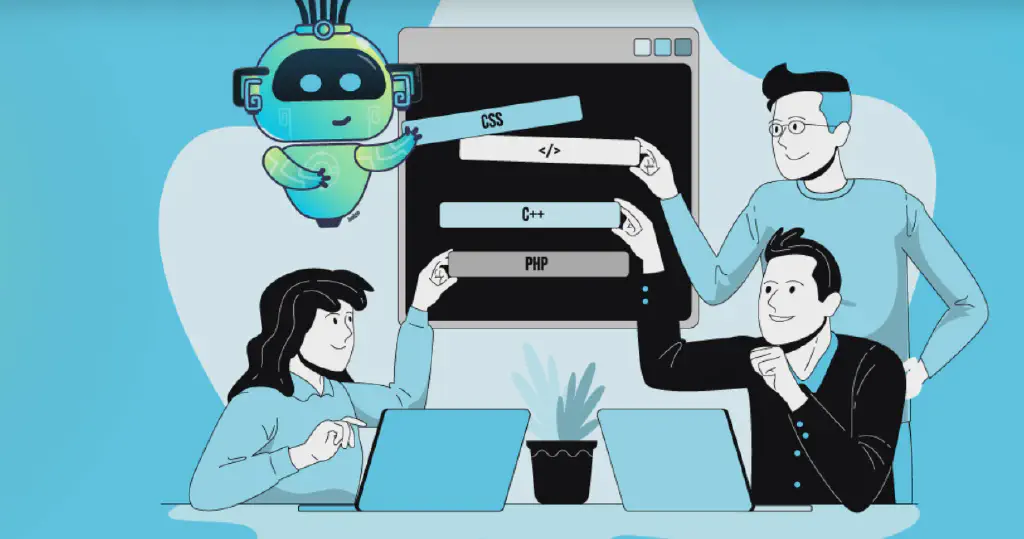
Rather than centralizing all AI use, encourage testers to build small, purpose-specific assistants with tools such as MCP. These are not company-wide platforms but personal accelerators.
One tester might build an accessibility checker, another might create a regression planner that pulls data from Jira, and another might focus on generating release notes from Xray results. Every QA person owns their own assistant and “AI apprentice”. Ownership strengthens accountability rather than dependence. Some teams even demo these results internally, turning AI use into shared learning rather than a secret experiment.
Building a Feedback Loop Around AI Use
Finally, AI should evolve with the team rather than sit outside the iteration rhythm. Every few sprints, review what actually worked:
Where did AI save real time?
Where did it add noise or hallucination?
How accurate were its suggestions?
Which validation rules need strengthening?
This feedback loop makes AI use deliberate, inspected and continuously improved, just like any other part of the testing process.
Starting Where Risk Is Low
One reason AI adoption fails is that teams either take too big a step or stay too vague.
They try from the start to use AI for final deliverables: final test cases, final documents, final decisions. When something goes wrong, trust collapses.
A better approach is to start where risk is low and learning value is high. For example:
Ask AI to suggest test ideas you may not have considered
Use it to rewrite acceptance criteria to check whether they are really clear
Generate edge cases for you to challenge and refine
Summarize exploratory testing notes so that patterns become visible
In these scenarios AI is not replacing responsibility but extending perspective. The rule that must be clear from day one is simple and powerful: AI can help you think. But it cannot decide for you. When teams understand that ownership never left them, fear decreases and misuse becomes easier to spot.
Letting Testers Apply Their Testing Skills to AI
This is the part many organizations completely overlook. In many cases test engineers already have exactly the skills needed to use AI safely, but they do not realize those skills apply here too. Treat AI’s answers just like:
Unverified requirements
Suggestions from a junior team member
Assumptions that need evidence
Teams should explicitly encourage engineers to interrogate AI output:
What assumptions did this answer make?
What context is missing?
Which scenarios did it ignore?
Does this still hold in production?
When engineers start doing this consistently, something interesting happens. They stop asking “is AI good or bad?” and start asking “in which situations is AI useful, and in which situations does it mislead?” That is a far more mature relationship.
Making AI Part of Existing Testing Habits
If AI sits outside the workflow, it will never become “daily work”.
You do not need new meetings or dedicated AI time slots. You need to integrate AI into the moments where thinking already happens.
During requirements refinement, AI can be used to surface risks the team may want to discuss.
During test planning, it can help build risk-based coverage.
During bug triage, it can help identify recurring themes across different defects.
During retrospectives, it can help summarize learnings for the team to judge.
Even in test automation, AI can support the team by copying an existing test case template and adapting it to a new scenario, but always with human review and ownership.
The key is consistency. If AI is used occasionally, it remains a novelty. If it is used visibly and repeatedly in shared spaces, it becomes normal. Culture changes through repetition, not through declarations.
Setting Boundaries That Empower Rather Than Constrain
One reason teams hesitate to use AI is uncertainty. They are unsure what is allowed, what is dangerous, or what might get them into trouble later.
This is where leadership needs to be clear and pragmatic. Rather than a long policy, define simple guardrails:
Which types of data may be shared
Which must never be shared
Where human review is mandatory
Where AI output must never be used
Good guardrails reduce anxiety. They make experimentation safer rather than scarier. When people feel safe, they learn faster.
Rethinking the Definition of “Success”
If you measure AI adoption by counting outputs, you will optimize for the wrong goal.
More AI-generated test cases does not automatically mean better testing. In fact, it often means the opposite.
More meaningful signals are subtler:
Are discussions going deeper and focusing on risk?
Is onboarding to testing faster?
Are blind spots found earlier?
Is the team spending less time on mechanical work and more on judgment?
These are not glamorous metrics, but they reflect real improvement. AI works best in testing when it improves thinking rather than replacing it.
What It Means for Team Leadership
Once AI enters the team, the role of the testing leader shifts. You are no longer responsible only for quality outcomes. You are also responsible for how thinking happens inside the team. Your behaviour matters more than your guidelines.
If you trust AI blindly, your team will follow.
If you avoid it entirely, so will they.
If you use it thoughtfully and critically, they will learn to do the same.
That is how AI gets embedded – not through enforcement, but through example. In the end, leading by example is not just a good strategy; it is the only one that truly works.
Conclusion
The future of testing is not about humans versus AI.
It is about those who know how to collaborate with AI without losing their judgment.
A strong testing team is not one that uses AI everywhere, but one that knows exactly where AI helps, where it misleads and where it should stand aside.
Training your team for this reality is not a technical challenge but more a leadership challenge.
A challenge we cannot ignore.
Generative AI for Software Testers | Revolutionize Your Testing Workflow with AI Tools
This video shows, through concrete generative AI tools, how to revolutionize the testing workflow. It works well as a supplementary reference to the idea of embedding AI into daily practice discussed in the article.