

Introduction
Going back fourteen years, to October 2011, at Google’s GTAC (Google Test Automation Conference), Alberto Savoia walked onto the stage dressed as the Grim Reaper and dramatically declared that “software testing is dead”.
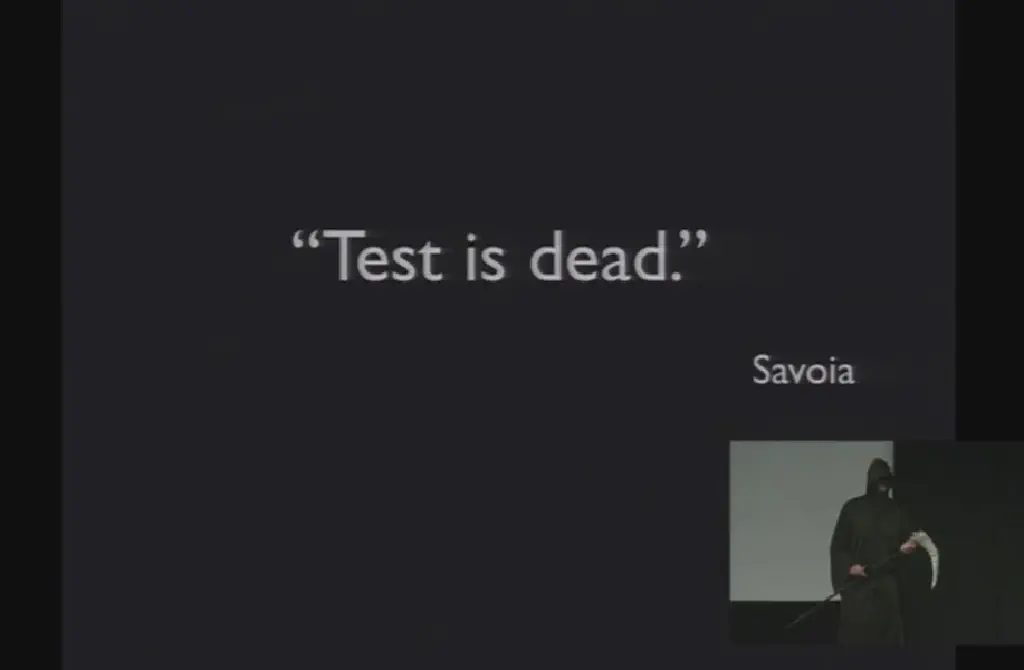
Soon after, the testing heavyweight Jame Whittaker made the same declaration, Test is Dead, at another testing conference, EuroSTAR.
The point of these remarks was the belief that software testing no longer needs to be an independent role in the software development process. With mature software processes and tools, macro-level quality problems no longer require a relatively large, dedicated team to guarantee them. Instead, testing should evolve into a series of micro-activities distributed among other roles, such as project managers, developers, and even end users. Distribute testing activities across other phases of development.
And as this manifesto spread widely, many tech giants, including Google and Microsoft, began to cut dedicated testing positions, and testing transformed into test development or software efficiency departments.
But more than a decade later, has the testing profession really died out? On the contrary, Whittaker himself published an article last year (2024) titled “The Resurrection of Software Testing”, re-examining the evolution of the testing industry (original text at https://medium.com/@docjamesw/the-resurrection-of-software-testing-634423cd8411)
In this article, let’s delve into this topic again.
The Recurring Claim That “Testing Is Dead”
From the time the “testing is dead” claim was made, it has in fact been raised many times. This saying has recurred in at least three periods:
- The Selenium open-source era: As automated testing tools gradually entered everyday enterprise use, machines replacing humans seemed within reach
- The era of rampant automation frameworks and platforms: A large number of automated testing solutions flooded the market, all claiming they could greatly reduce testing work
- Today’s AI era: With AI now in full swing, the old tune is replayed, claiming AI can already replace the work of testers
Why?
Actually, on careful reflection, this cyclical recurrence is no accident; it reflects a common misalignment between technological change and industry perception. Whenever a new technology appears, people tend to be overly optimistic that it can completely replace human judgment and creativity.
Beyond that, the testing industry’s own perception of testing largely supplies fuel for this claim.
Many training institutions, and many testers themselves, do not regard testing as a discipline
- Enter the field with zero background
- Even a novice can do testing
- Testing is nothing but “clicking around”
- Knowing how to write automation scripts makes you a senior tester
Companies confuse automation with testing
Many companies vigorously promote automation and set up test-development positions.
But they fail to truly recognize that so-called automated testing is, more often than not, just checking, which is far from real testing.
Test developers spend a great deal of time building frameworks and platforms, trying every means to improve efficiency with tools, but there are few real cases of achievements in expanding testing thinking or digging out deep quality problems.
Unclear testing goals
As said before, there are many who believe testing exists to verify requirements. Testers are more like “quality inspectors” holding a checklist, judging by whether specifications are met rather than whether the product can deliver value.

It is precisely these widespread misconceptions across the testing industry that do enormous harm to testing itself.
But even after testing positions are cut? TDD, BDD, and starting with the end in mind mean developers actually take on testing duties; or end customers are made to act as testers without knowing it, and once they find a problem, people scramble to fix it quickly.
So it is not that testing is dead; only the party responsible for performing testing and the division of responsibilities have shifted.
What Kind of “Testing” Should Truly Die Out?
Just as I have stressed in several earlier articles about the real purpose of software testing. 【】
The true purpose of testing is neither simply to verify requirements nor merely to find bugs.
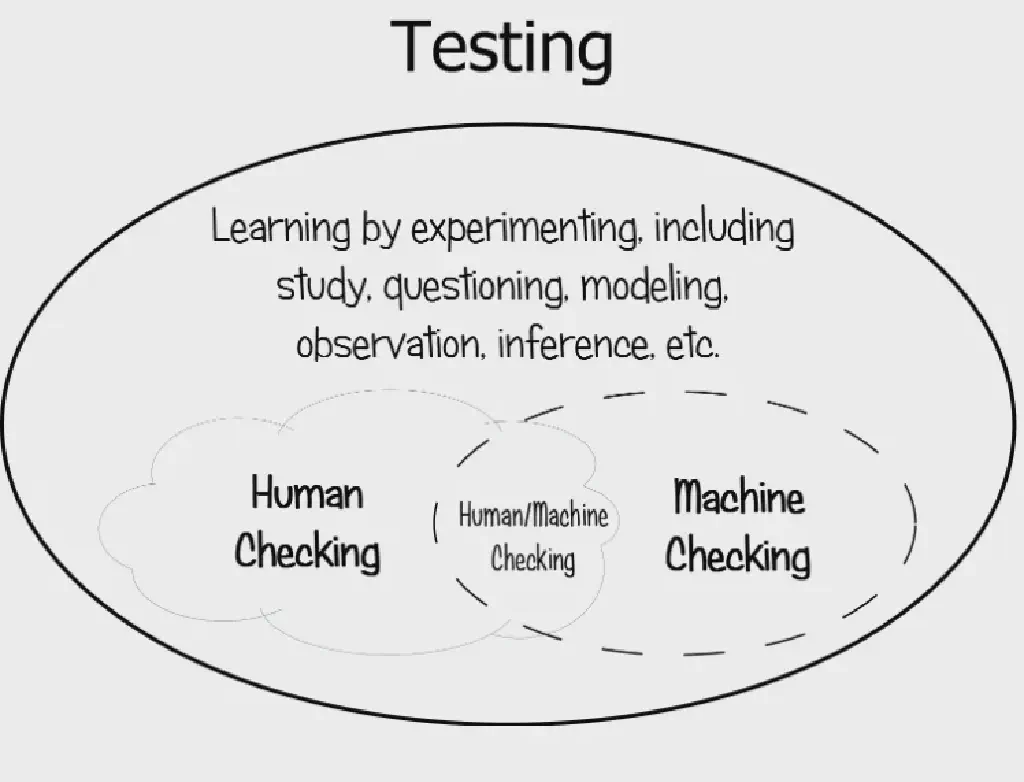
A clear distinction should also be drawn between testing and checking. As technology advances, the checking part of testing is what should gradually be weakened and removed from testing responsibilities.
Automated testing, those checklists of test cases and the green progress bars on CI dashboards, really cannot count as testing genuinely oriented toward quality; all they bring is a false sense of security.
These “checkbox activities” that tick through items according to pre-written scripts are the part that should truly be distinguished from testing and should die out.
Spending large amounts of time writing and maintaining these formalized test cases and test scripts actually reduces the real testing time available for exploring the product and gaining insight into risks, and in fact harms the true value of testing.
Automated Testing vs. Real Testing
We must clarify the following core understanding:
Automated testing is usually only used to check what is already known, the behavior we expect the system to perform. Real testing, on the other hand, is about the unknown. It is a discipline that requires investigation, exploration, questioning, reasoning, experimentation, and verification. No script or AI can fully replace it.
The true value of testing should always lie in exploring the unknown, in discovering problems that cannot be foreseen through automation.
Redefining the Value of Testing
Testing is not only about finding bugs, nor only about tools. Its value should include:
- Understanding product risks: Identifying potential problems that could affect users or the business
- Communicating uncertainty: Clearly conveying findings about product quality and risk
- Modeling user behavior: Predicting how real users will interact with the system
- Finding problems others missed: Offering a unique perspective and insight
These values are indispensable in any software development lifecycle. When an organization truly understands these values, testing will inevitably take an important role in the software development process, whether performed by dedicated testers or by developers and other roles.
Conclusion
Testing has never died; it only keeps being reborn!
The “testing is dead” claim surfaces every few years, but testing has never truly died. It only keeps evolving - from manual testing to automation, from an independent role to distributed responsibility, from verifying the known to exploring the unknown. Every evolution is the result of testing adapting to new environments and new technologies.
Today, as we face the wave of AI, the same story is replaying. Some predict AI will replace testers, but history tells us that technology changes the way testing is done, not the need for it. AI can automate more tasks, but the critical thinking, creativity, and systems thinking of human testers remain irreplaceable.
The future of testing does not lie in resisting change, but in embracing evolution. Testers need to develop new skills and adopt new tools, but more importantly, they must hold fast to the core value of testing - exploring the unknown, assessing risk, and safeguarding quality.