
The Toughest Job-Hunting Season Ever
The slogan “the toughest job-hunting season ever” is repeated every year, but for the class of 2025, this seems to be no longer just a slogan.
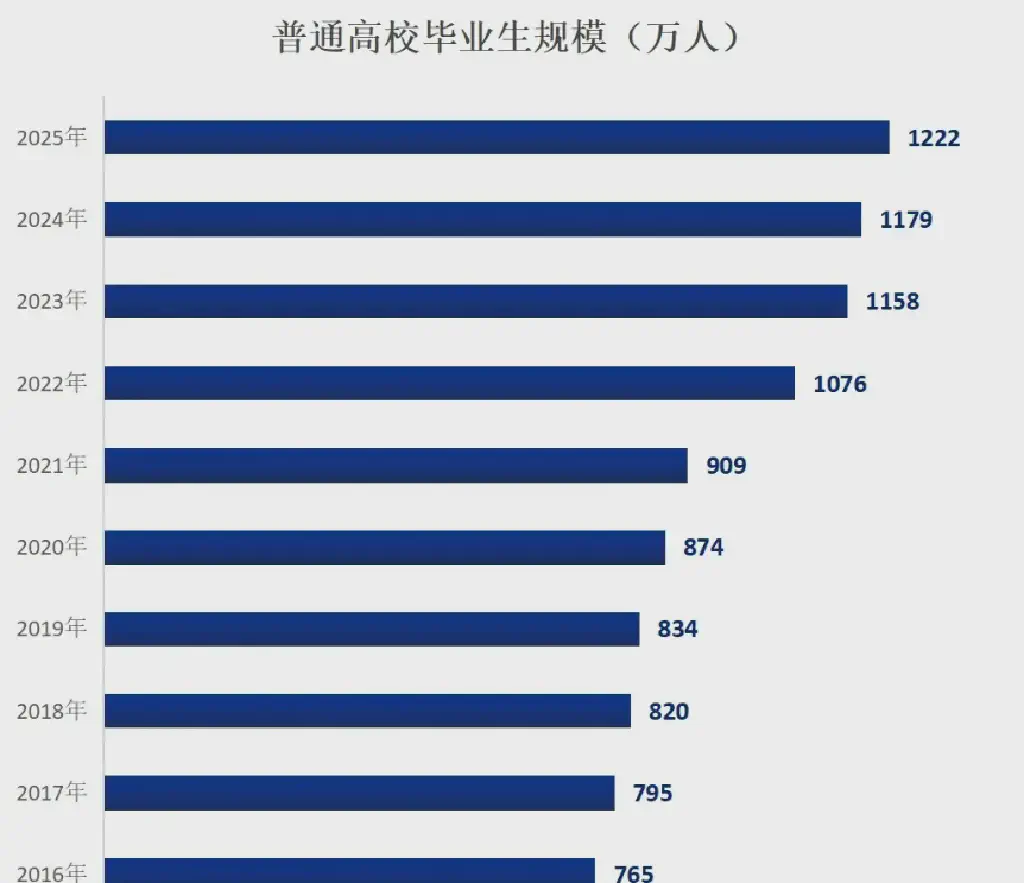
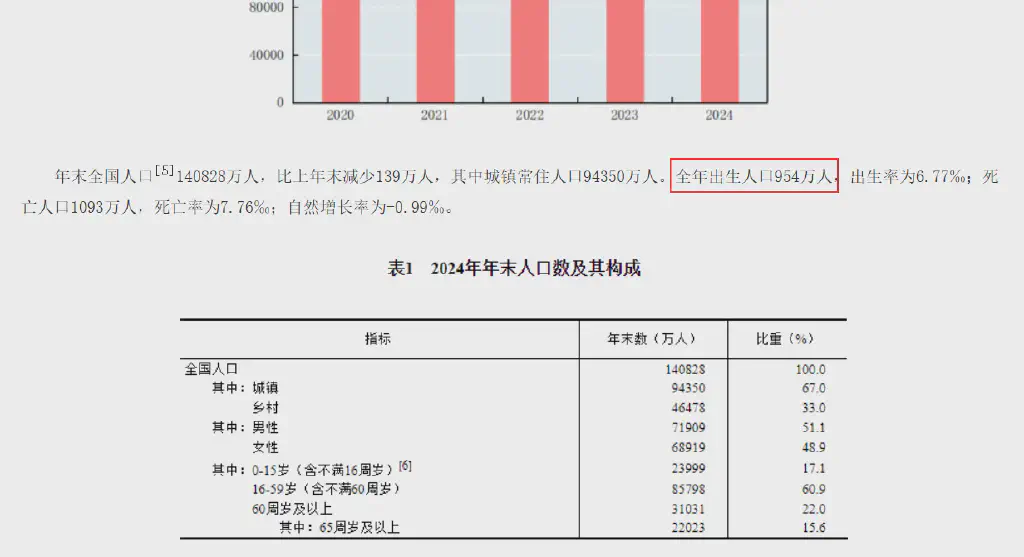
According to Baidu’s forecast data, against the backdrop of year-on-year enrollment expansion in universities, the number of college graduates in 2025 has reached a staggering 12.22 million (compared with 9.54 million newborns in 2024 <2024 Government Economic and Social Development Statistical Bulletin>, the halo of a university degree has long since faded), and the pressure on the supply side of employment has hit a historic peak!
And according to the latest report from Zhaopin, the overall employment rate of college graduates (including flexible employment) is currently only 55.5%. For many graduates, “graduation means unemployment” seems to have become a bitter reality!
A Tale of Two Extremes in IT Employment
With the explosive growth of industries such as AI and intelligent driving, demand in the IT sector remains strong, yet it also clearly shows a trend of polarization! On one hand, emerging fields such as artificial intelligence and cybersecurity are short of talent; on the other hand, traditional internet positions are shrinking, and the competition ratio for some positions exceeds 100:1
IT Is Still a Guarantee of Good Pay
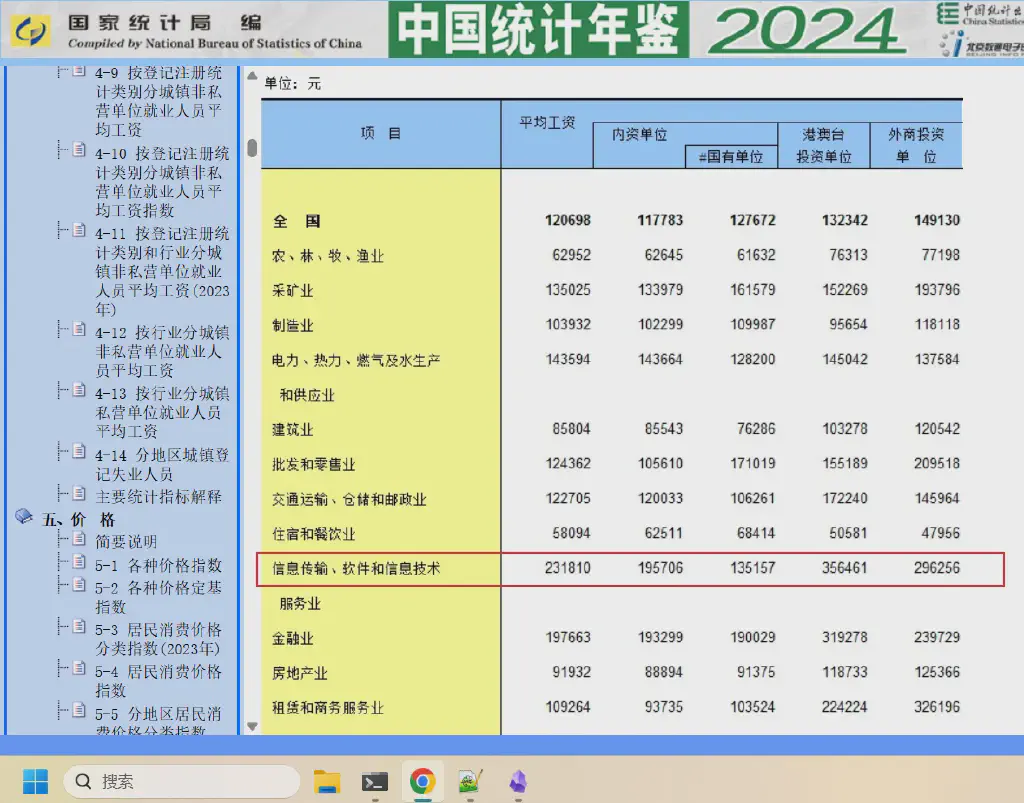
According to data from the 2024 national statistical yearbook, the IT industry, with an average annual salary of 231,800 yuan, has topped the industry pay rankings for nine consecutive years
Falling Employment Rates and Rising Education Barriers
The overall employment rate for computer science undergraduates of the class of 2024 fell to 68.65%, and some universities saw extreme cases of “only 200 out of 600 students employed”. For core positions at major tech firms (algorithm, R&D, etc.), over 60% require a master’s degree, and students from 985/211 universities, backed by university-enterprise collaboration resources, find it easier to land high-paying opportunities. ( Data Source)
Widening Salary Polarization
- Top tier: algorithm roles at major tech firms pay 400,000-500,000 yuan annually, while top AI talent can earn 800,000-1.5 million yuan a year
- Ordinary tier: undergraduates from ordinary colleges generally earn a monthly salary of 7K-10K, and some are forced to change careers or “downshift” to second-tier cities
- Industry comparison: the IT industry, with an average annual wage of 231,800 yuan, has ranked first among all industries for nine consecutive years, yet the average monthly salary of computer science undergraduates of the class of 2023, 6,771 yuan, was overtaken for the first time by electronic information majors (6,802 yuan)
Saturation of Traditional Positions
Java back-end and basic development roles have become a “red ocean” due to fierce competition, with resume submission ratios at small and medium-sized enterprises reaching 8:127. Salaries for junior development positions have fallen back to 8-12K, and many companies have begun to exhibit the phenomenon of “hiring at lower pay”.
Explosive Shortage of High-End Talent
- Artificial intelligence: the talent gap exceeds 5 million, with a supply-demand ratio of 1:10
- Cybersecurity: only 30,000 people are trained each year, yet the position gap is as high as 700,000, a gap rate of 95%, and the shortfall is expected to widen to 3.27 million by 2027
- Hard-tech fields: demand for domestic innovation and local-substitution positions such as chip design and industrial software is growing by 15%+ annually
Self-Help Strategies
So, under such employment conditions, how can current graduates — or students about to enter the job market — break through?
Target High-Growth Fields and Seek Blue-Ocean Opportunities
- Cybersecurity: obtain the NISP Level 2 certificate (which can be exchanged for CISP without an exam); certificate holders enjoy priority hiring by enterprises and subsidies from local governments
- AI application layer: focus on real-world scenarios such as autonomous driving, medical imaging, and quantitative finance
- Hard tech: embedded development (IoT), domestic substitution of industrial software
Build Compound Skills
“Computer Science + X” compound talents earn 20% more than purely technical roles, for example:
- FinTech (quantitative models)
- Bioinformatics (gene sequencing)
- Smart agriculture (sensor technology)
Back Yourself with Hands-On Experience
- Internships at major tech firms: the conversion-to-full-time rate exceeds 50%, and summer internships have become a core springboard
- Project experience: high-star GitHub projects, Kaggle competition rankings, and university-enterprise collaboration project experience
- Certification boost: certifications such as cloud-native (Kubernetes) and penetration testing (CISP-PTE)
Make Rational Regional Choices
New first-tier cities offer outstanding value for money: IT salaries in places such as Suzhou and Xi’an reach 60%-80% of those in first-tier cities, while living costs are 30%-50% lower.
Conclusion
For graduates who stay in their comfort zone and have only a single skill, the 2025 IT job market is undoubtedly a cold winter; but for those who actively embrace change, proactively learn cutting-edge technologies, and develop the ability to solve complex problems, it is also a golden age full of boundless opportunities.
The challenges are real, and the future will always belong to those who take the initiative!