Introduction
“Every day is packed with endless meetings! More than half the time is spent listening to a few people arguing!” “They love pulling a huge crowd into every meeting, yet hardly anyone actually speaks up!” “A single requirement change, and a meeting planned for 10 minutes drags on for two hours!”
In fast-paced software development, meetings are an indispensable part of information sharing, decision making, and problem solving. Yet what we often experience is how inefficient they are! According to statistics, a software engineer spends an average of 12 hours per week in various meetings, but 60% of those meetings are proven to be inefficient or even useless .
How can we make meetings a genuine collaboration tool rather than a time sink? In this article, by introducing the 5P method for effective meetings, we will break down the core logic of making meetings more efficient and escape the “sea of meetings”!
What Is the 5P Method?
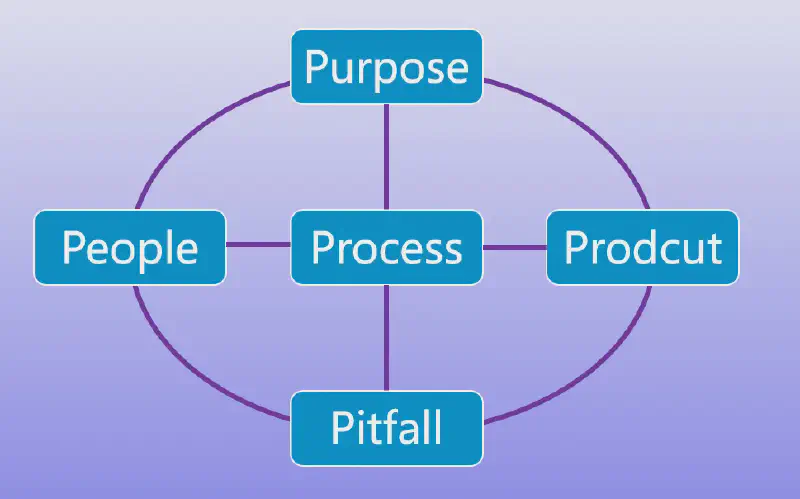
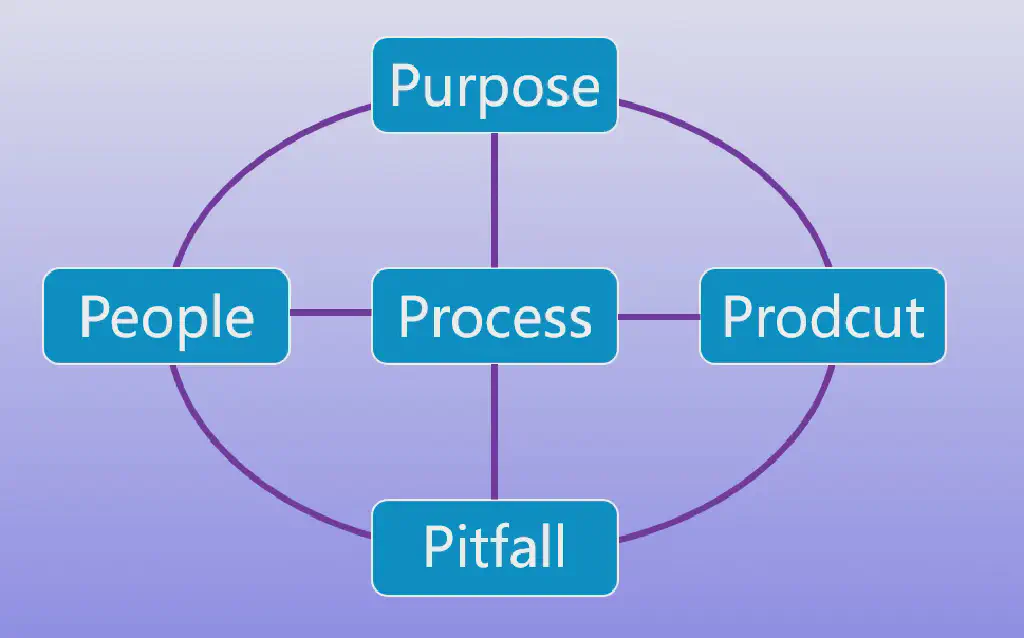
The 5P method for meetings is essentially the five main aspects we need to focus on when holding a meeting. Handle these five aspects well, and meetings will not sink into the mire of being aimless, lengthy, and inefficient.
People - Who Should Attend?
Case - In a requirements clarification meeting, only the product manager and a few core developers took part, while testers and UI/UX designers were absent. As a result, during development it was discovered that the understanding of the requirements did not match testing expectations, and the UI/UX design also deviated from the implemented features, leading to a large amount of rework later.
One of the most common problems with inefficient meetings is that “the people who should be there aren’t, while a crowd of people who shouldn’t be are.” So making sure all key and necessary stakeholders are invited, while avoiding the participation of irrelevant people, is the first step to a successful meeting.
Focus on the following points:
- Necessity: Only invite those who can provide key information, participate in decisions, or are directly affected by the meeting outcomes.
- Representation: If the team is large, invite representatives from each function to attend.
- Clear roles: Clarify each person’s speaking priorities and responsibilities.
For example, in the requirements clarification meeting above, we can identify the following People roles to attend:
- Product Owner: Explain the requirements background, user stories, and business value.
- Development Team Lead/Members: Ask questions from a technical implementation perspective and assess feasibility.
- Test Lead/QA Engineer: Ask questions from a testability perspective and think through test scenarios.
- UI/UX Designer: Clarify the details of user interaction and interface design.
- (Optional) Architect: If the requirements involve complex system architecture changes.
Purpose - Why Are We Holding This Meeting?
Case - An agile retrospective turned into a “gripe session” or a “praise session”; everyone chimed in, but nobody focused on how to improve the workflow and collaboration for the next iteration. The meeting was held, yet by the next iteration the existing problems still had not improved.
A meeting without a goal is like a lone boat at sea that has lost its navigation; it easily loses its bearing, with no guarantee of where it will end up, and ultimately fizzles out.
Only when every participant understands the meeting’s purpose can everyone’s understanding be aligned and the discussion be kept from drifting off the main topic.
And when setting the goal here, a few things should be kept in mind:
- Goals should be specific, measurable, achievable, relevant, and time-bound (SMART principle).
- Try to focus a single meeting on 1-2 core goals, avoiding too many topics that cause loss of focus.
- Make sure all participants share a common understanding of the meeting goals.
For example, for the iteration retrospective above, we can make the goals explicit:
- Primary goal: Review what went well and what had problems in the previous iteration, and define concrete improvement measures for the next iteration.
- Specific sub-goals:
- Identify the 1-2 obstacles that most affect team efficiency and work out solutions;
- Identify one good practice that should be maintained.
Process - How Should the Meeting Be Run?
Case - A test case review meeting. Only after the meeting started did everyone receive a thick stack of printed test cases, reading them one by one and raising questions on the spot. The presenter’s explanation lacked focus, and reviewers’ thoughts wandered, causing the meeting to run seriously overtime with extremely poor review results.
If Purpose is about keeping the right heading, then Process is the nautical chart for the ship of the meeting. A clear process guides the meeting in an orderly way, ensures every topic is fully discussed, and reaches the goals within the scheduled time.
This includes agreements on the agenda, time allocation, discussion rules, decision-making methods, and so on.
Using the case above again, we can agree on the Process before the meeting:
- Structured agenda:
- Pre-meeting preparation (5-10 minutes, or completed before the meeting): The host briefly states the review scope, goals, and case background. Emphasize that the test cases have been shared in advance and that participants are assumed to have read them beforehand.
- Discussion of key/doubtful cases (30-40 minutes): Focus the discussion on questions collected in advance or cases flagged as important. Set a time limit for discussing each complex case.
- Summary and confirmation (10-15 minutes): Consolidate review comments, clarify who is responsible for changes and the deadlines. Confirm whether consensus has been reached on test coverage.
- Clear discussion rules: For example, encourage constructive opinions, avoid interrupting speakers, and define how to decide when opinions differ (such as majority rule, or a final decision by a specific role).
- Time control: Set an estimated time for each agenda item and enforce it strictly.
Product - What Are the Outcomes of the Meeting?
Case - A release planning meeting. During the meeting, everyone discussed many feature ideas and potential risks for the new version, but no clear release scope, priorities, or owners were established. After the meeting, people were still vague about “which features the new version should actually include.”
First, let us clear up a misconception: a meeting does not count as having produced output simply because it is over and meeting minutes have been generated. The real outcome of a meeting should be a consensus that can be translated into next actions, and one that is traceable. It can be a decision, an action plan, a solution, a record of consensus, updated documents, and so on. Without a clear deliverable, the meeting is effectively a waste.
For the case above, clear deliverables could be:
- Confirmed release scope: A clear Features List or set of User Stories, with priorities distinguished.
- Preliminary timeline: Key milestones and the estimated release date.
- Clear division of responsibilities: An owner for each major module or task.
- Identified risks and responses: Document potential risks and initial mitigation plans.
- Meeting minutes: Include all of the above and specify follow-up items. It is the written record of the meeting outcomes
Pitfall - What Risks Are Anticipated?
Pitfall refers to “what potential problems or obstacles might arise during the meeting, and how do we prevent or respond to them?”
Common Meeting Risks and How to Address Them
Topics sprawl and the discussion goes off track:
- Pitfall: Participants may dig too deeply into a certain detail or bring in unrelated topics.
- Response (combining Purpose & Process): The host should keep the meeting’s core goal in mind at all times and gently steer the discussion back on track. A “Parking Lot” mechanism can be set up to note points that come up on the spur of the moment but are unrelated to the current topic, to be discussed after the meeting.
Key people absent or late:
- Pitfall: Core decision makers or information providers fail to join on time, so the meeting cannot move forward effectively.
- Response (combining People): Confirm the time with key people in advance and send meeting reminders. If someone is absent at the last minute, assess whether to continue, adjust the agenda, or reschedule the meeting.
A few people dominate the conversation while others stay silent:
- Pitfall: This can lead to incomplete information and biased decisions.
- Response (combining Process): The host should consciously invite silent participants to speak, or use methods such as round-robin speaking and anonymous opinion collection to ensure everyone has a chance to contribute.
Insufficient preparation and information asymmetry:
- Pitfall: Participants have not read the materials in advance, so a lot of time in the meeting is spent syncing basic information.
- Response (combining Purpose & Product): Send meeting materials (such as requirements documents, design drafts, and cases to be reviewed) clearly to participants in advance, and explicitly ask them to read and prepare before the meeting.
No clear action plan or follow-up:
- Pitfall: The discussion is lively, but nothing is translated into concrete actions, and it ultimately fizzles out.
- Response (combining Product): Before the meeting ends, be sure to summarize action items, owners, and deadlines, and clarify how progress will be tracked afterwards.
In short, thinking through potential risks in advance and preparing response strategies can effectively keep meetings from being interrupted by surprises or derailed, ensuring they run smoothly and achieve their intended goals.
Summary
Through the case-based introduction of the 5P method above, to run a meeting efficiently, the 5P method can effectively keep it from getting out of control. Its core logic is actually this:
“Use structured methods to counter the randomness of human nature”
- People (the right attendees): Make sure the right people are in the room.
- Purpose (a clear goal): Be clear about why we are here and where we are going.
- Process (a clear process): Plan the path well and move forward in an orderly way.
- Product (the expected output): Leave with results.
- Pitfall (anticipated risks): Avoid obstacles and arrive smoothly.
In my earlier articles about the four agile meetings, the related practices also reflect the core logic of the 5P method, and I recommend reading them for reference~