Introduction
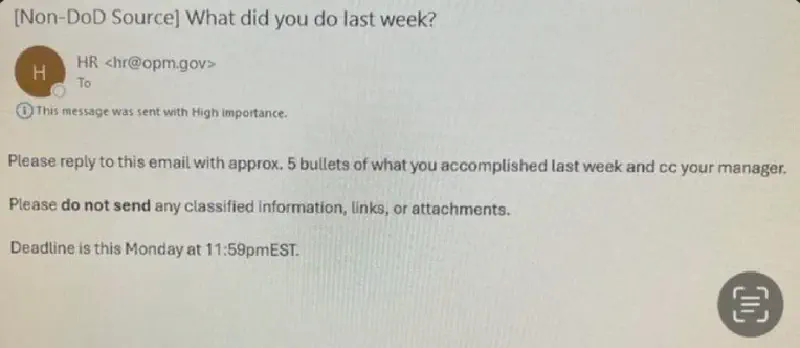
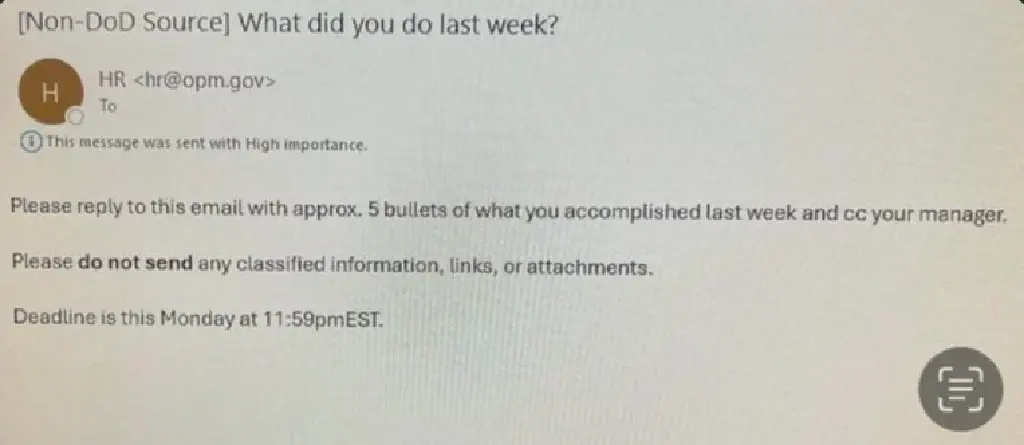
One of the hottest topics online these past couple of days has to be Musk’s new DOGE policy — the now-famous “what did you do last week” email requiring every federal employee to send a weekly report listing the five things they did last week, cc’ing their supervisor! Miss it twice in a row and it’s treated as a resignation!
And by now more than 1 million U.S. civil servants have already sent this weekly report! 😂😂😂
As corporate wage slaves, we know this routine all too well — but come to think of it, why do weekly reports even exist?
What Is the Essence of the Weekly (or Daily) Report?
For these U.S. civil servants, writing a weekly report may still be something of a novelty, but for a business-born boss like Musk, weekly reports are a long-standing favorite — he rolled out similar policies at Tesla and Twitter years ago.

So why, from a company’s or a boss’s point of view, do they want to see employees’ weekly reports?
Take a software testing department as an example; the value of a weekly report mainly shows up in the following areas:
- Risk control
This should be the part every Leader cares about most in a weekly report. Through weekly reports, you can know the overall progress of the whole project and get a grip on overall quality risks — such as testing delays or insufficient quality exposure. The weekly-report level, unlike a daily report, isn’t overly detailed, so it’s a good input for keeping a handle on the overall status.
- Resource optimization
By aggregating and analyzing weekly-report data, a Leader can also grasp how much effort every member is putting in, making it easier to dynamically allocate testing resources.
And this is also the focus of all the attention on Musk’s new policy, because the result the weekly reports point to is that underworked federal employees may get fired 🤪🤪
- Decision basis
A weekly report usually also contains some quantitative metrics, such as testing progress, defect data, coverage, escape rate, external support, and other quality data that can be captured or actively reported. These data quantify the current quality state and present it visually, serving as important support for decision-making.
How Should Testers Write a Weekly Report?
So as a test engineer, if we’re going to send a weekly report, what should it usually contain?
Here is a weekly-report example from an employee working on IoT software (a smart band):
| |
The weekly report above is summarized from two angles — the project and the testing department — and the value it reflects can be summed up in the table below:
| Element | Value to the Project | Value to the Testing Department |
|---|---|---|
| Test execution progress | Clarifies version quality status and helps the PM assess whether release criteria are met. | Quantifies team output, making resource allocation and efficiency optimization easier (e.g., adjusting test case priorities). |
| Defect distribution and trends | Exposes module risks and pushes development to focus on core issues (e.g., a high defect rate in the heart-rate module calls for refactoring). | Analyzes root causes of defects (code/design/environment) and drives test case library additions and process improvements (e.g., adding low-battery scenarios). |
| Risks and dependencies | Warns of delay risks and promotes cross-department collaboration (e.g., involving the hardware team). | Wins support from upper management (e.g., requesting a longer test cycle or more device resources). |
| Special test results | Validates non-functional requirements (e.g., power consumption, stability), avoiding hard hits to user experience. | Accumulates performance baseline data to provide a basis for comparison in later versions (e.g., a power-consumption metric library). |
| Next week’s plan and goals | Aligns with project milestones, keeping testing in sync with development (e.g., the blood-oxygen feature test plan matches the iteration schedule). | Clarifies team division of labor, avoiding overlapping or missed tasks. |
Summary
So, as an employee, there’s really nothing to resist about weekly reports — it’s just a perfectly normal management practice. For testers, the weekly report is both a “dashboard” for testing work (reflecting quality status in real time) and a “bridge” for cross-department collaboration (driving problem resolution and resource coordination), while also providing data support for optimizing long-term testing strategy.
When it all comes down to it, the goal is still status synchronization
Just like agile stand-ups, and the daily reports that traditional projects may also have, their purpose is actually the same; I’ve covered this in detail in earlier posts, so feel free to refer to those.