Lately I am often asked about the prospects of the software testing industry, and there is no shortage of voices online declaring the decline of testing. Many people choosing a career direction are also quite confused about whether they should enter this profession.
So I am starting this post to talk about Qiucao’s understanding of what the software testing role requires, as well as my views on the profession’s prospects.
What Kind of Role Is Software Testing, Really?
To choose an industry, you first have to understand why that industry exists and what value it actually provides.
As a technical branch of the software industry, software testing is a role oriented toward software quality.
The reason this profession exists is that quality, as one of the core attributes of a product, needs to be guaranteed to the greatest extent possible. Testing work is what, before a product is delivered to users, completes the assessment of product quality and exposes potential quality problems in the product as much as possible, so that the product R&D team can improve and remedy them.
So the purpose of software testing work is: to assess the quality status of the object under test as timely and accurately as possible
My other post The Real Purpose of Software Testing explains this point in detail, so I will not repeat it here.
Judging from the purpose and value of the software testing profession, this role is not a production unit but a support unit. Through the various testing techniques associated with the position, it protects the product and keeps it from suffering losses due to quality problems.
Therefore, as long as quality remains a core attribute of a product and quality problems can affect whether a product succeeds, the testing function will remain a necessary technical branch and a function that must be included in software product R&D.
Skill Requirements for Software Testing
Since software testing is a technical role, doing this job well cannot be separated from mastering a variety of related skills.
Foundational Skills
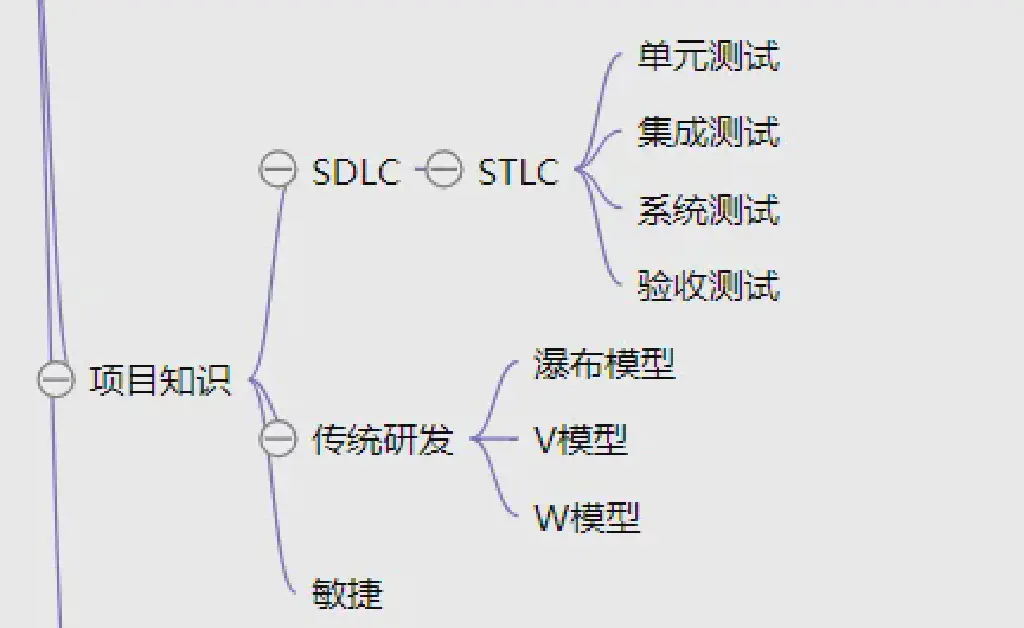
- First, knowledge related to the software development process and the operation of software projects themselves. Understand the complete process of software engineering from requirements to delivery, and understand project operations and the role of the testing position within them. What exactly is the software development lifecycle SDLC? What is the testing lifecycle? The relationship between traditional development models and Agile development? What activities does Agile involve, and so on?
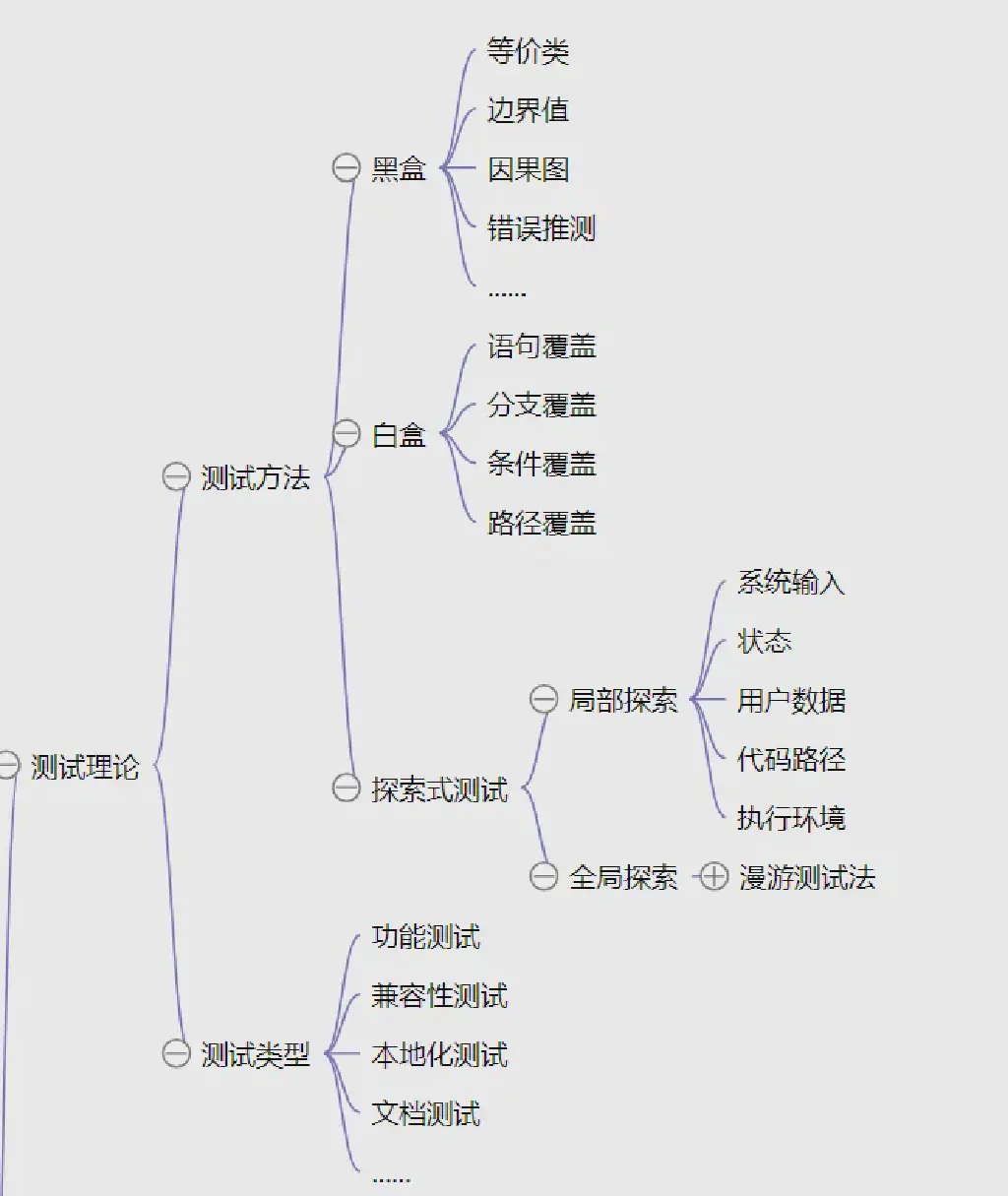
- Mastery of basic testing theory, mainly the various testing methods and testing types, and an understanding of various testing concepts
Skill requirements related to testing work itself. Including the writing of test cases and test reports, the requirements for submitting Bugs, fault severity standards, fault handling processes, and status reports
Requirements for business understanding. The components of software requirements, the relationship between overall product architecture and requirements, the relationship between product software design and functions, etc. You need to build up an understanding of the product and its business logic.
With the foundational skills above, you have basically met the basic requirements for completing testing work.
Technical Capabilities
Beyond mastering foundational skills, doing testing work well inevitably requires mastering further, more advanced related knowledge.
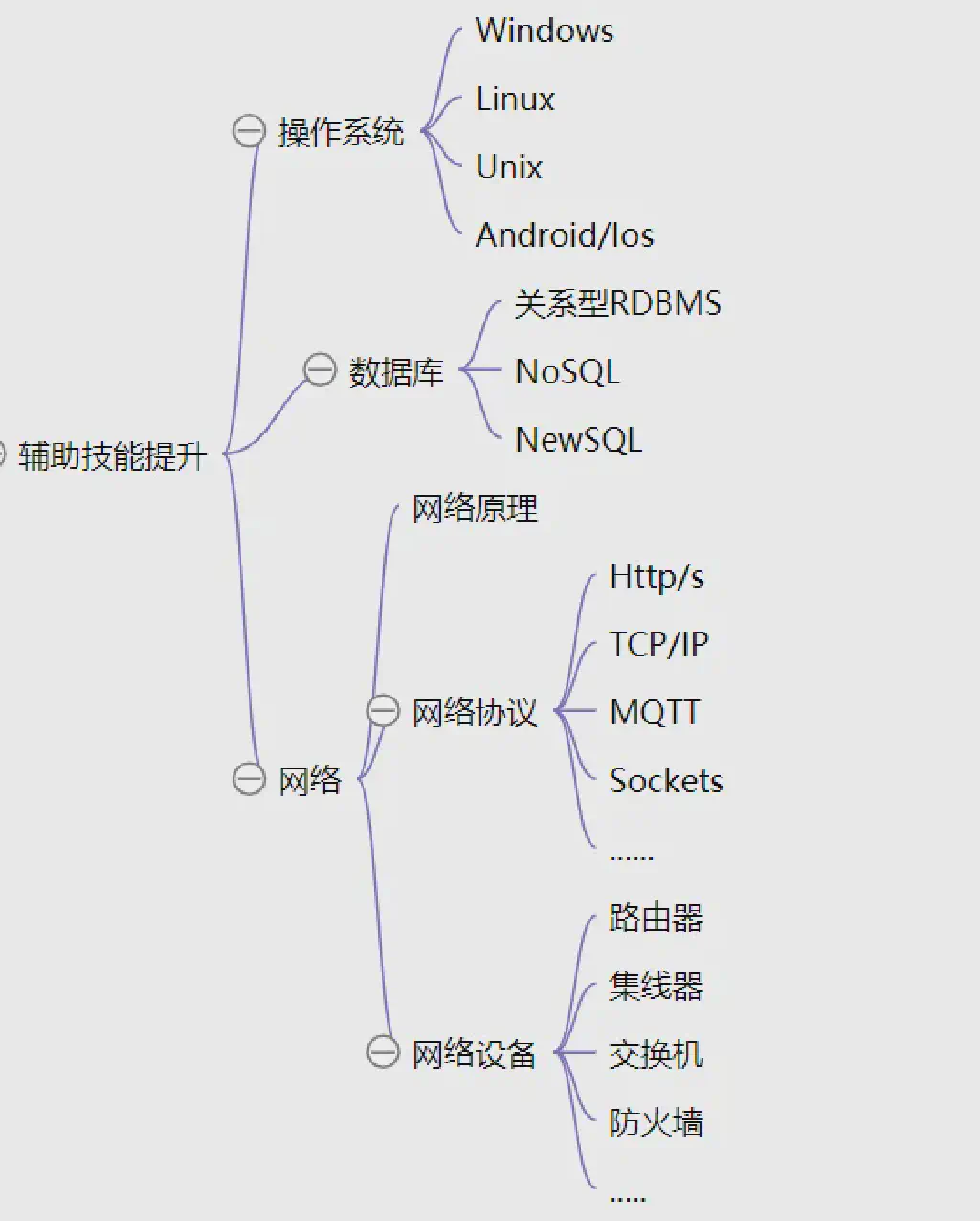
- Related IT skills. Mainly the major areas of operating systems, databases, and networks. Each of these areas has enough depth and breadth. Few people can be extremely proficient in every direction. But to grow into an excellent tester, these capabilities are indispensable.
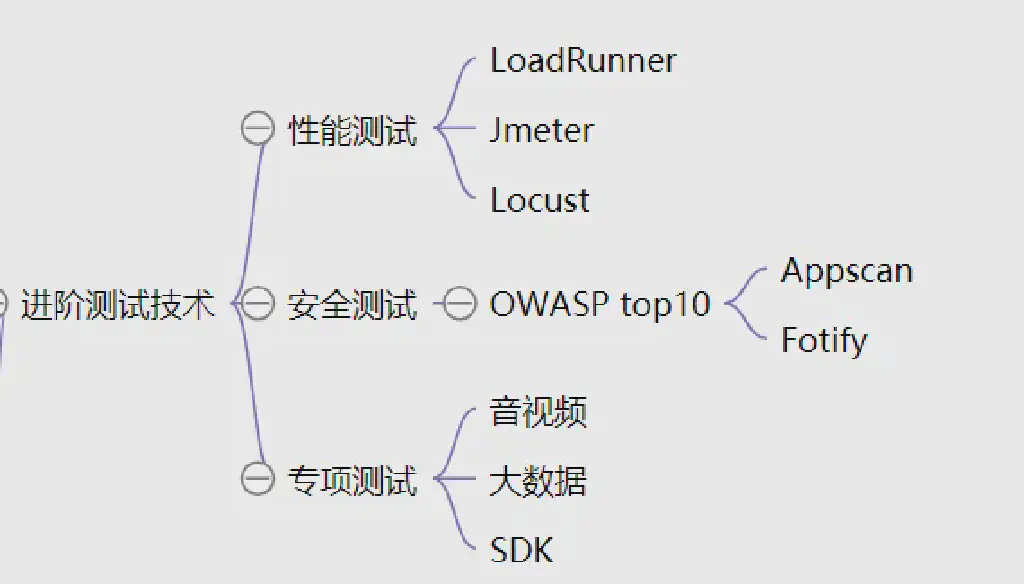
- Some advanced testing types—testing types that need to be built on a higher technical capability foundation—mainly performance testing, security testing, and some specialized testing
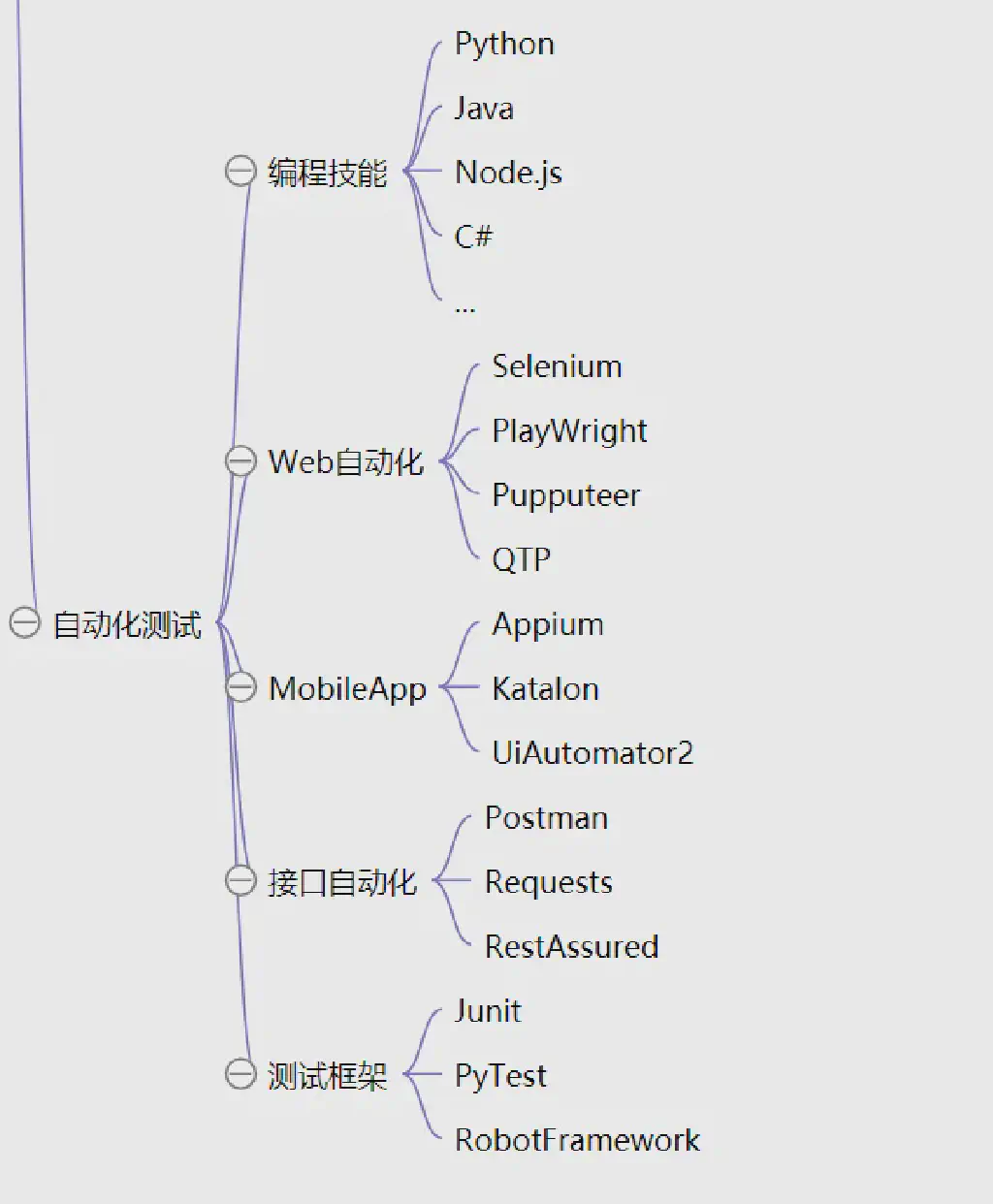
- Skills related to test automation. Being able to implement automation is already a must-have skill for testers today. Automation capability is built on programming ability and tools for different automation types.
Soft Skills
Software testing is also a role that places great emphasis on collaboration and communication skills. Therefore, beyond technical capabilities, certain related soft skills are especially critical to whether you can do this job well and do it beautifully.
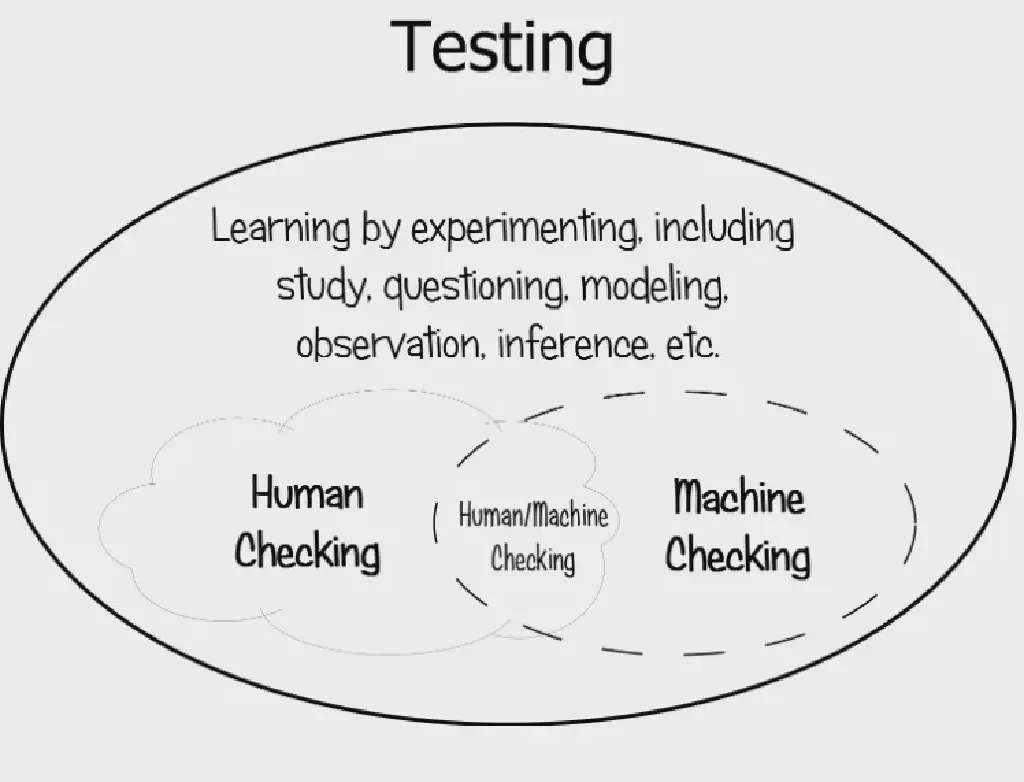
Testing is not equivalent to checking. A very important part of testing ability also includes soft skills such as reasoning, questioning, and observation. Being careful, spotting clues, and having an inquisitive spirit are especially important for testing work.
Summarization and written expression skills. Producing fault descriptions, test reports, and so on are all expressions of summarization and writing skills. The purpose of testing work is to be able to assess the quality status of a product, and presenting that assessed status is exactly where the written expression skills here come in.
Collaboration and communication skills.
Because of the nature of the work, testing requires frequent communication and collaboration with BAs, with developers, and with other project members, clarifying problems, and often needing to persuade others to understand the impact of a problem on quality. So good collaboration and communication are also an important part of a test engineer’s capabilities.
- Presentation and demonstration skills
As the last inspection step before a product is released, testing often has to take on the responsibility of introducing and demonstrating product functions to others during delivery to users or during demo sessions in Agile teams. In such cases, your presentation and demonstration skills are a capability that provides value not only to yourself but also to the team.

Career Development Paths
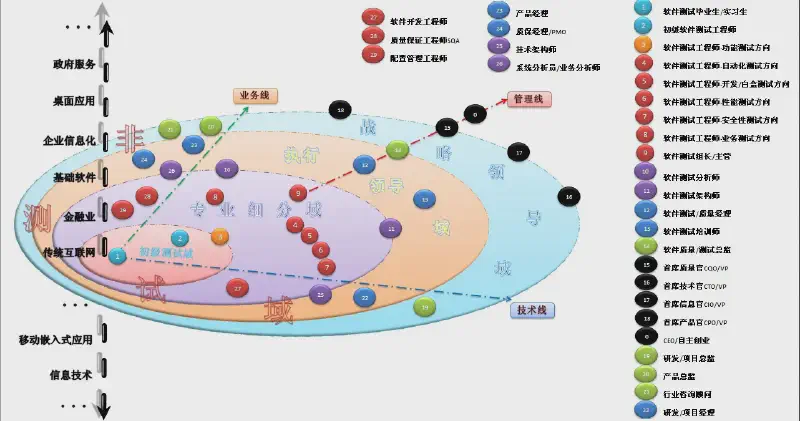
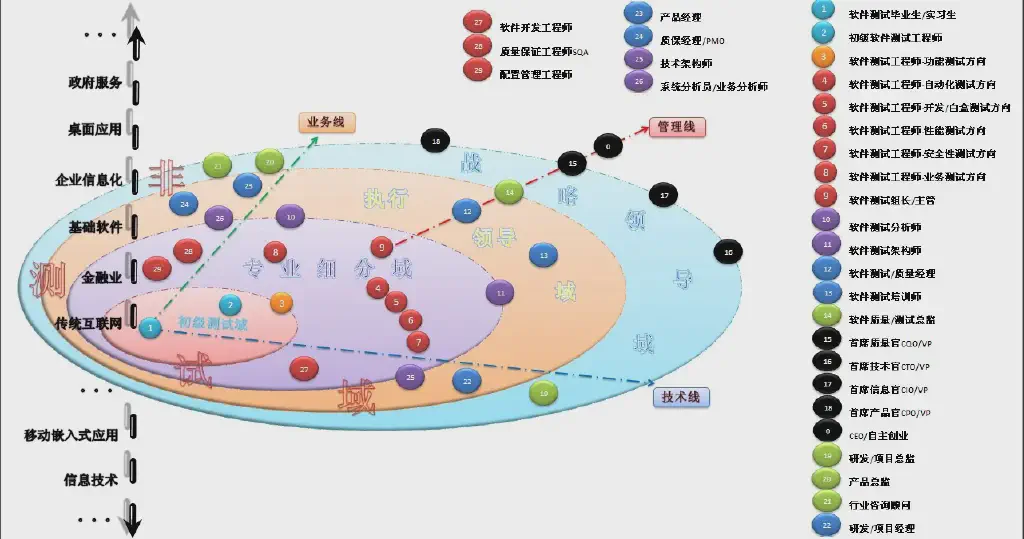
For those working in the testing industry, there are generally three directions for personal career development. There is a testing career roadmap online that actually illustrates the growth path of testing quite clearly.
- The management track
This line is actually the main one. Under China’s specific conditions, once experience, technology, and seniority reach a certain level, people still gradually transition toward management, climbing step by step from test lead, test manager, and test director to quality director and vice president along such a line.
The technical track And as a technical role, most companies do in fact provide a technical development channel, achieving career development through technical advancement—from mid-level and senior engineer to staff engineer and even expert engineer, through the software technology track.
The business track In addition, as the role in an R&D team that is relatively more familiar with the overall business, testing moving toward the business track is also an important growth channel—from test analysis to business analysis and even to roles such as project management and QA—likewise a suitable development direction.
Future Prospects
Finally, let me talk about the worries many students, including quite a few fellow testing practitioners, have about the prospects of the software testing profession: Is testing already in decline? Is the future direction of development the gradual elimination of testing?
Is Traditional Development Obsolete, and Does Agile Development Not Need Testing?
Actually, a few years ago there was already a wave of opinion that testing positions could be gradually eliminated. “Google and Facebook disbanded their testing teams,” “the ratio of developers to testers shrank to 10:1,” and the rise of Agile development, which defines only a single development team—all of it seemed to suggest that testing is no longer a necessary role in the modern software development process.
In fact, Agile development does not weaken testing; on the contrary, it emphasizes testing even more, especially shift-left testing. Practices such as TDD (test-driven development) and requirements acceptance criteria all emphasize the importance of functional testing. It is just that these practices place testing more inside the development team rather than in a separate, dedicated testing team. Agile no longer distinguishes different roles within the Agile team (dev team), but instead emphasizes that the team should possess the various roles and capabilities needed to complete product development.
In other words, although Agile defines only three roles—PO, Scrum Master, and Dev Team—the Dev team should in fact contain members with a variety of capabilities, including designers, developers, and testers, without subdividing specific responsibilities, emphasizing the team as a whole, and it is possible that some members wear multiple hats.
So it is not that Agile rejects testing, but that it treats R&D activities, including testing, as a whole. We could just as well say that in Agile there is no longer design, no longer configuration management, and so on.
Dedicated Testing Roles?
So does this change mean that dedicated tester positions will disappear? Judging from the definition of Agile, that is indeed the case. Just as in Agile there would no longer be dedicated design personnel, configuration personnel, or even a definition of developer roles. In this sense, there are no longer specialized test engineers in Agile teams.
But on the other hand, as I have discussed in other articles, Agile emphasizes the team as a whole, with the whole being responsible for quality and the team self-organizing to complete all aspects of product development. This is the ideal of the group of software development masters who proposed the concept of Agile, but an ideal is not the same as reality.
The reality is that each trade has its own specialization, and in particular the two functions of development and testing are inherently somewhat opposed to each other.
- Developers tend to pursue certainty. Based on certain requirements and steps, they define the product’s behavior.
- Testers, by contrast, need to consider all kinds of possible paths and branch scenarios based on uncertainty, and to assess the product’s possible behavior based on the unknown.
The opposition between these two ways of thinking determines that it is hard for one role to do both development and testing well. In Agile teams, there will still be a need for roles that lean more toward testing. Dedicated testers will inevitably continue to bring their professional value to bear.
The Transformation of Testers Themselves
Of course, the emergence of Agile has also provided an opportunity for testers to correct some previously mistaken values. Testing is not for finding Bugs, nor is it merely for verifying requirements. Rather, from the perspective of product quality, it assesses the quality status of the product, with the goal still being the realization of the product’s own value. Testing should take on part of the QA function within an Agile team.
Will Test Automation / AI Replace Testing Roles?
Another major worry is whether, with the development of AI, testing positions will be replaced by AI. Of course, this is not limited to testing; other IT roles, including developers, have similar concerns.
Frankly speaking, given the current pace of AI development, it is hard to say whether, ten years from now, something like programming or software development will still be a profession that relies heavily on strong skills. Developing products may be more about accurately describing your ideas to AI, with AI completing the implementation based on the input requirements.
In theory, testing roles are similar. Many mistakes that programmers would originally make are inherently avoided by AI when it implements things, so bugs in the programs themselves will be greatly reduced. But beyond that, part of testing work consists of test scenarios that were not considered. Of course, AI can supplement many exceptional scenarios on its own based on requirements, but if a scenario is strongly business-related, AI may still find it difficult to fully cover it through its own reasoning.
In addition, many exceptional test scenarios depend heavily on the construction of the test environment, and simulating these exceptional situations—such as network disconnection, insufficient resources, and high concurrency—should still be rather difficult without the intervention of an actual operator.
There is one more point: the training of AI itself also has the problem of data poisoning. Just as automated testing today also has the problem of Bugs in the test scripts themselves, verifying the effectiveness of AI itself also falls within the scope of testing.
So from these perspectives, AI cannot replace testing work in the near term.